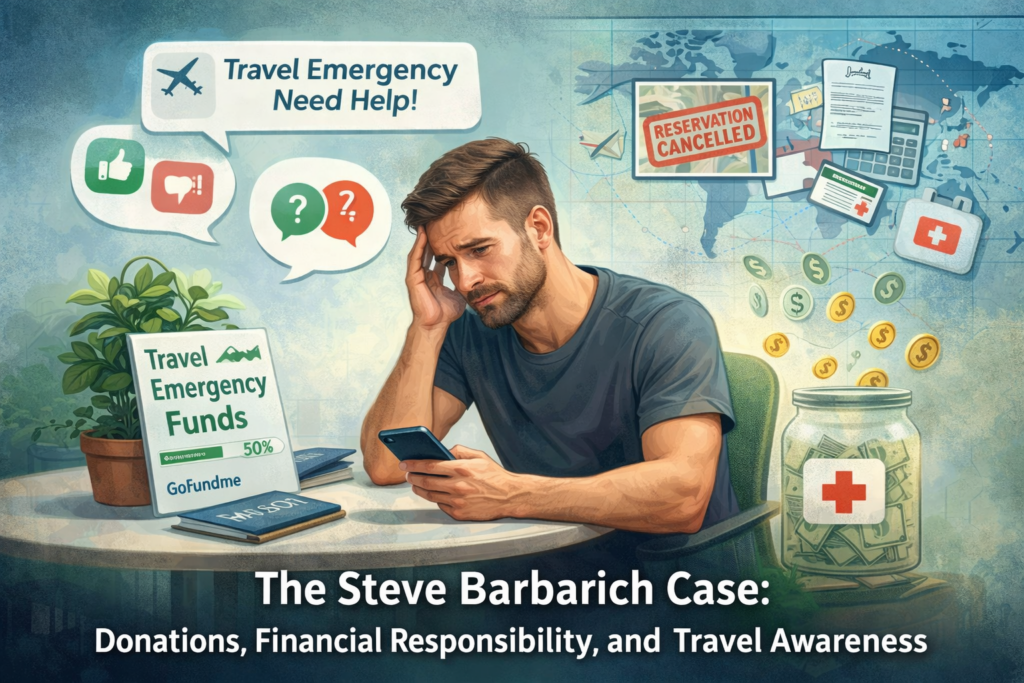
Travel today is not just about destinations—it often intersects with digital platforms, community support, and even public donations. The case of Steve Barbarich highlights how financial challenges during travel can lead to reliance on external help, raising important questions about responsibility, transparency, and ethical decision-making.
Background of the Case
Steve Barbarich, an independent traveler, encountered serious difficulties during his trip after facing accommodation problems, unexpected expenses, and limited contingency planning. As costs escalated, Barbarich reportedly turned to public support channels, seeking donations to help cover his travel setbacks.
This situation sparked mixed reactions—some empathized with his struggles, while others questioned the need for public financial assistance in a privately planned trip.
The Role of Donations in Travel Emergencies
In recent years, it has become more common for travelers to seek financial help through:
Crowdfunding platforms
Social media appeals
Community-based fundraising
In Barbarich’s case, donations were used to:
Cover emergency accommodation costs
Fund transportation changes
Stabilize his travel situation after disruptions
Public Reaction and Ethical Concerns
The case drew attention because it sits in a gray area between genuine need and personal responsibility.
Supporters argued:
Travel emergencies can happen to anyone
Unexpected situations may require urgent financial help
Community support reflects compassion and solidarity
Critics pointed out:
Travel is a personal choice that should be financially planned
Lack of preparation should not rely on public donations
Transparency about how funds are used is essential
Key Lessons for Travelers
- Build an Emergency Fund
Travelers should always set aside extra money for:
Unexpected accommodation changes
Medical or safety concerns
Transportation disruptions
- Use Donations Responsibly
If seeking public support:
Be transparent about the situation
Clearly explain how funds will be used
Provide updates to donors
- Plan Beyond the Basics
The Barbarich case shows that:
Booking alone is not enough—verification matters
Backup options should always be prepared
Travel insurance can reduce financial risk
- Understand Public Perception
Asking for donations can impact reputation:
It may attract empathy or criticism
Public trust depends on honesty and accountability
Broader Implications
The Steve Barbarich case reflects a larger trend in modern travel where digital connectivity allows individuals to seek help quickly—but also exposes them to public scrutiny.
It raises an important question:
Where should the line be drawn between community support and personal responsibility?
Conclusion
The case of Steve Barbarich serves as a cautionary example for travelers navigating financial uncertainty. While donations can provide relief in genuine emergencies, they should never replace proper planning and preparation.
Ultimately, responsible travel means being ready—not just for the journey—but for the unexpected challenges that come with it.