Business scams and frauds have become more common in recent years, especially with the rise of online transactions and digital communication. From small startups to large companies, no business is completely safe from fraud. Understanding how these scams work is the first step toward preventing financial loss and protecting your reputation.
What Are Business Scams and Frauds?
Business scams and frauds refer to dishonest activities designed to steal money, information, or resources from a company. These scams may be committed by outsiders such as fake suppliers and online criminals, or even by employees inside the organization.
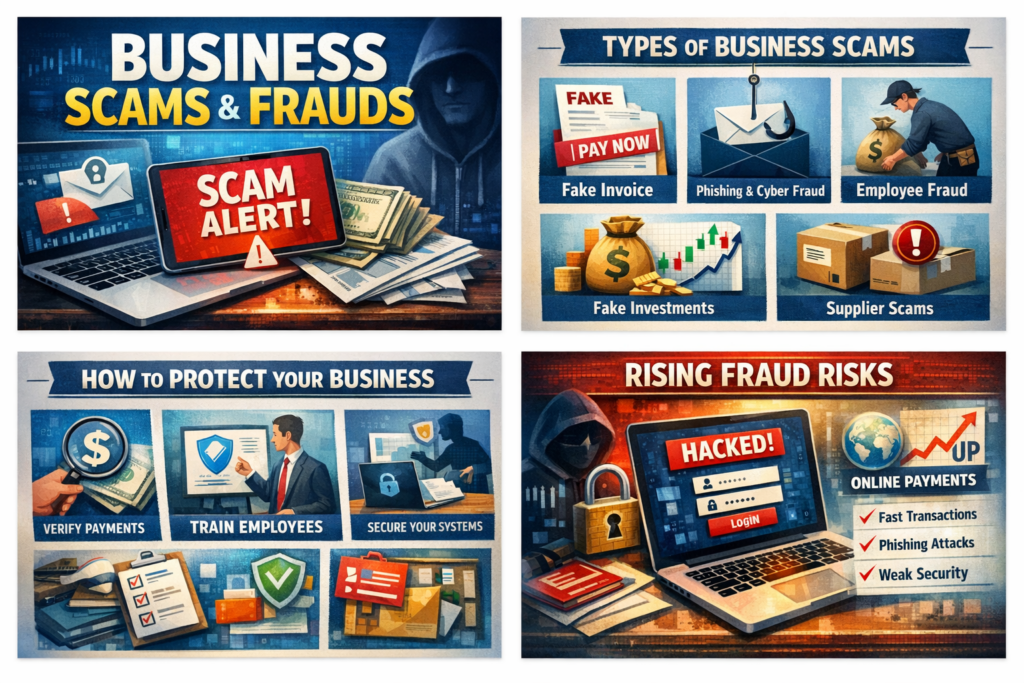
According to the Federal Trade Commission, business fraud often targets small and medium-sized businesses because they usually have fewer security systems in place. Similarly, the FBI has warned that online scams such as fake invoices and email fraud continue to grow every year.
Common Types of Business Scams
- Fake Invoice Scams
In this type of fraud, a scammer sends a fake bill that looks real. It may appear to come from a supplier, utility company, or service provider. Many businesses pay these invoices without checking carefully, especially when the amount looks small.
Example:
A company receives an email that looks like it came from a trusted supplier. The payment details are slightly changed, and the business unknowingly sends money to a scammer.
- Online Payment and Banking Fraud
Cybercriminals often try to steal login details from business owners through fake websites or emails. Once they get access, they can transfer money or make unauthorized transactions.
The Interpol has reported that cyber-related business fraud has increased due to the growing use of online banking and e-commerce.
- Employee Fraud
Not all scams come from outside the company. Employee fraud happens when a worker steals money, misuses company funds, or manipulates financial records.
Common examples include:
Taking money from cash payments
Creating fake expense reports
Stealing company equipment
- Fake Investment Opportunities
Some scammers target business owners by offering “high-profit” investments. These offers usually promise fast returns with very little risk, which is a major warning sign.
Many small business owners lose money because they trust these offers without checking if the company is legitimate.
- Online Marketplace and Supplier Scams
Businesses that buy products online may encounter fake suppliers. The business pays in advance, but the goods are never delivered.
This type of scam is common in international trade and online marketplaces where verifying sellers can be difficult.
Why Business Scams Are Increasing
There are several reasons why fraud continues to grow:
- More businesses rely on online communication
2. Payments are now faster and easier to transfer
3. Scammers use technology to create realistic emails and websites
4. Small businesses often lack strong security systems
Because of these factors, even experienced business owners can become victims.
How Businesses Can Protect Themselves
1. Verify every payment
Always confirm payment details before sending money, especially when receiving a new invoice or email request.
2. Train employees
Employees should learn how to recognize suspicious emails, fake invoices, and unusual payment requests.
3. Use secure payment systems
Businesses should use secure banking platforms and avoid sending money through unverified channels.
4. Check business partners
Before working with a new supplier or partner, verify their contact details, website, and business registration.
Final Thoughts
Business scams and frauds are a serious problem, but they can be prevented with awareness and careful planning. By understanding common scams and taking simple precautions, businesses can protect their money, data, and reputation.
In today’s digital world, staying alert is one of the most important skills for every business owner. 🚨💼