Short-term vacation rentals have changed the way people travel. Platforms like Airbnb, Vrbo, and Booking.com make it easy to find affordable homes, apartments, and unique stays worldwide.
But as the industry grows, so do scams targeting travelers — especially first-time users and bargain hunters.
Understanding how these scams work can save you money, stress, and a ruined trip.
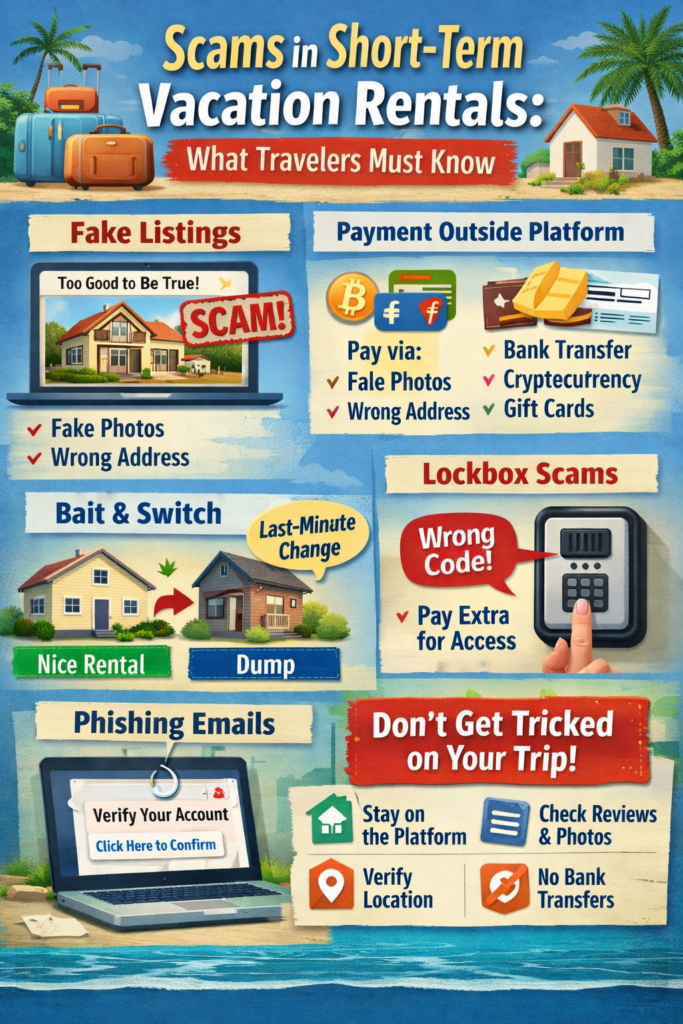
Why Vacation Rental Scams Are Increasing
Short-term rentals operate between private individuals rather than traditional hotels. That flexibility creates opportunity — but also risk.
Scammers exploit:
High tourist demand
Last-minute bookings
Travelers unfamiliar with local housing
Pressure to secure cheap deals quickly
Unlike hotels, the property owner may not be verified beyond basic platform checks, making deception easier.
Most Common Short-Term Rental Scams
- The Fake Listing Scam
This is the most widespread fraud.
A scammer copies real photos from another website and posts a fake listing at a very low price. The traveler books, pays, and arrives to discover:
The address doesn’t exist
The home is occupied by someone else
The owner has no idea about the booking
Warning signs
Price far below nearby rentals
Newly created account
Few or no reviews
Blurry or mismatched photos
- Payment Outside the Platform
After initial contact, the “host” asks you to pay via:
Bank transfer
Cryptocurrency
Gift cards
Messaging apps
They often claim:
“The platform fees are high — I’ll give you a discount if you pay directly.”
Once paid, they disappear.
Important rule:
If you leave the platform’s payment system, you lose protection and refunds.
- Bait-and-Switch Properties
You book a beautiful apartment.
Before arrival, the host suddenly says:
“The unit has plumbing problems, but I have another one available.”
The replacement property is usually:
Smaller
Dirtier
Far from the city center
Unsafe
Because you’ve already traveled, many victims reluctantly accept.
- Lockbox or Access Code Scam
The host gives an entry code that doesn’t work. Then they ask for an extra “security deposit” to release a new code.
After payment — no response.
- Security Deposit Extortion
After checkout, the host claims:
Broken furniture
Stains
Missing items
They submit fake photos to keep your deposit.
- Phishing Emails Pretending to Be the Platform
Travelers receive emails appearing to come from a booking site asking them to:
“Verify payment”
“Confirm reservation”
“Re-enter credit card details”
The link leads to a fake login page where credentials are stolen.
How to Protect Yourself
Always Do These Checks
- Stay inside the platform
Never pay outside the official app or website. - Reverse image search
Upload listing photos to Google Images — if they appear on multiple unrelated listings, it’s likely stolen. - Read reviews carefully
Look for:
Detailed experiences
Consistent writing style
Multiple dates over time
Fake reviews are usually short and generic.
- Check the map location
Zoom in on street view. Does the property match the photos? - Message the host questions
Ask specific questions about:
Nearby landmarks
Parking
Appliances
Real hosts answer naturally. Scammers reply vaguely.
What To Do If You’re Scammed
- Contact the platform immediately
- Freeze or dispute your credit card payment
- Save screenshots and messages
- Report the listing to prevent other victims
- File a police report (required for insurance claims)
Most booking platforms provide protection — but only if you paid inside their system.
Leave a Reply